
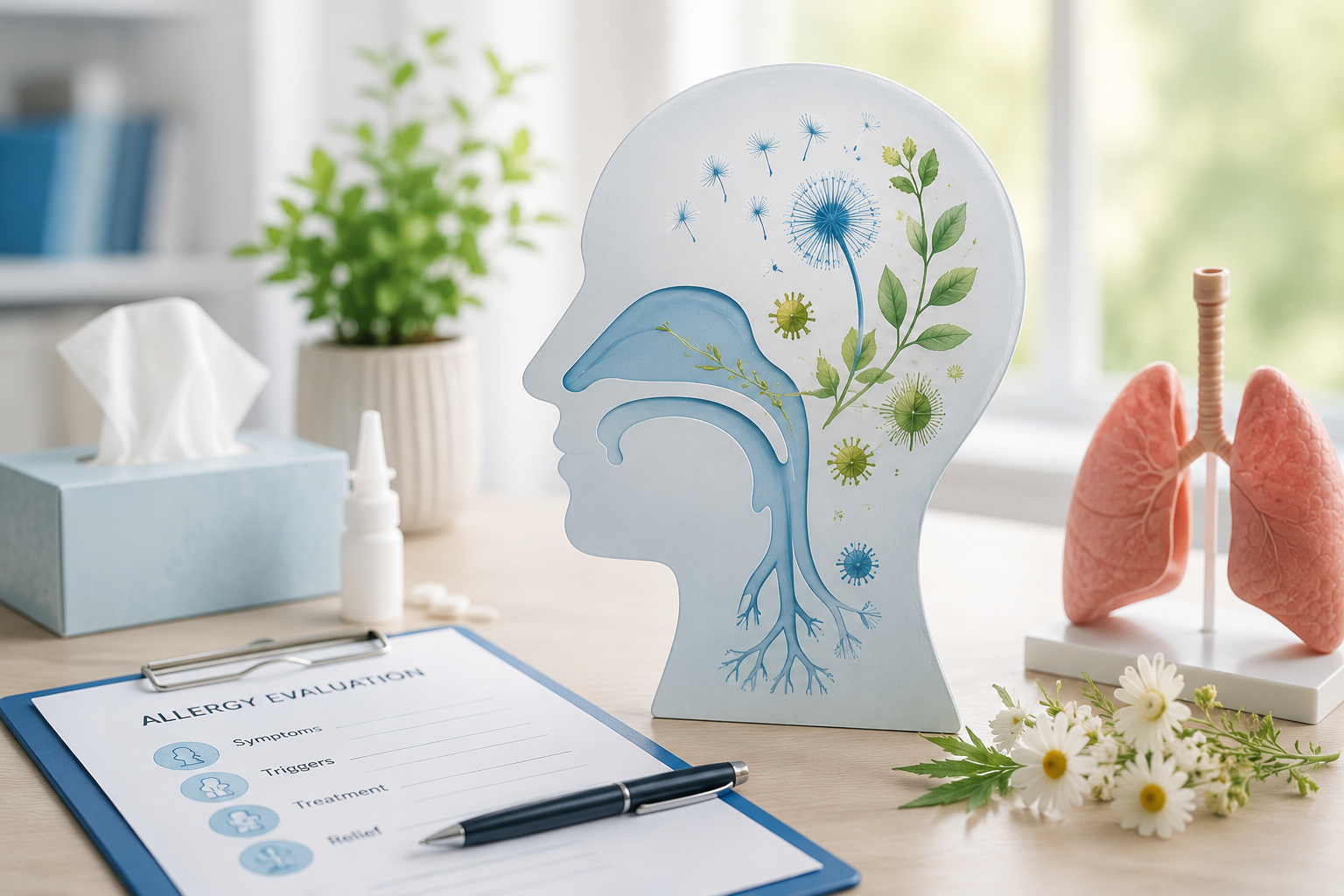
Seasonal allergies, also known as hay fever or seasonal allergic rhinitis, affect millions of people every year. While blooming trees, fresh-cut grass, and changing seasons are part of nature, they can also release airborne allergens that trigger sneezing, congestion, itchy eyes, and other uncomfortable symptoms. Understanding what causes seasonal allergies—and how to prevent them—can help you stay healthier throughout allergy season.
Quick Guide
- Pollen is the leading cause of seasonal allergies.
- Symptoms often include sneezing, congestion, and itchy eyes.
- Checking pollen forecasts can help reduce exposure.
- Early treatment may prevent symptoms from becoming severe.
- Allergy testing can identify your specific triggers.
What Are Seasonal Allergies?
Seasonal allergies occur when the immune system overreacts to airborne allergens that appear during certain times of the year. Although these substances are harmless to most people, the immune system identifies them as a threat and releases histamine and other inflammatory chemicals, producing allergy symptoms.
Unlike year-round allergies, seasonal allergies are closely linked to pollen seasons, weather patterns, and environmental conditions.
Common Causes of Seasonal Allergies
Tree, Grass & Weed Pollen
Pollen is the most common seasonal allergy trigger. Different plants release pollen at different times throughout the year:
- Spring: Tree pollen such as oak, birch, and cedar.
- Late Spring & Summer: Grass pollen.
- Fall: Weed pollen, particularly ragweed.
Mold Spores
Outdoor mold grows in damp soil, fallen leaves, compost piles, and other moist environments. Mold spores become airborne and can trigger allergy symptoms, particularly during humid weather.
Weather & Environmental Conditions
- Wind spreads pollen over long distances.
- Warm temperatures can extend pollen seasons.
- Climate changes may increase allergen exposure.
Recognizing Seasonal Allergy Symptoms
Symptoms range from mild to severe and often interfere with sleep, concentration, and daily activities.
Common Symptoms
- Sneezing.
- Runny or blocked nose.
- Postnasal drip.
- Itchy nose, throat, or ears.
- Fatigue.
- Watery or itchy eyes.
Can Seasonal Allergies Affect Asthma?
Yes. Seasonal allergens can trigger asthma symptoms in some individuals, leading to coughing, wheezing, chest tightness, and shortness of breath. This is often referred to as allergy-induced asthma and may require additional treatment.
Seasonal Allergies vs. Cold or Flu
Although symptoms may appear similar, allergies and viral illnesses have important differences.
- Allergies do not cause fever.
- Symptoms continue while allergen exposure remains.
- Nasal drainage is usually clear.
- Antihistamines often improve allergy symptoms.
How Seasonal Allergies Are Diagnosed
Diagnosis usually includes a review of symptoms, seasonal patterns, medical history, and allergy testing. Identifying your specific triggers helps guide the most effective treatment plan.
- Skin prick testing.
- Blood tests (specific IgE testing).
- Assessment of symptom patterns.
How to Prevent Seasonal Allergies
While seasonal allergens cannot be completely avoided, a few simple habits can greatly reduce exposure and help minimize symptoms throughout allergy season.
Reduce Pollen Exposure
- Check daily pollen forecasts before going outdoors.
- Limit outdoor activities during peak pollen hours, especially early morning.
- Keep windows closed at home and in your vehicle.
- Shower and change clothes after spending time outside.
- Dry laundry indoors during periods of high pollen counts.
Creating an Allergy-Friendly Home
Keeping indoor air as clean as possible can significantly reduce allergen exposure and improve daily comfort.
- Use HEPA air purifiers whenever possible.
- Vacuum regularly using a HEPA-filter vacuum.
- Wash bedding weekly in hot water.
- Dust surfaces frequently.
- Maintain indoor humidity to discourage mold growth.
Treatment Options for Seasonal Allergies
If avoiding allergens is not enough, medications and allergy treatments can help control symptoms and improve quality of life.
Common Medications
- Antihistamines to reduce sneezing and itching.
- Nasal corticosteroid sprays to decrease inflammation.
- Decongestants for short-term congestion relief when appropriate.
Long-Term Treatment
Allergy immunotherapy (allergy shots or allergy tablets) gradually helps the immune system become less sensitive to allergens and may provide long-term symptom improvement for suitable patients.
Supportive Home Remedies
Although home remedies do not replace medical treatment, they may provide additional comfort during allergy season.
- Use saline nasal rinses to flush allergens from the nasal passages.
- Wear sunglasses outdoors to help protect your eyes from pollen.
- Stay well hydrated.
- Get enough sleep to support your immune system.
Seasonal Allergies in Children & Older Adults
Seasonal allergies can affect people of all ages, but symptoms may appear differently depending on the individual.
Children
- Frequent sniffing.
- Mouth breathing.
- Difficulty sleeping.
- Irritability or trouble concentrating.
Older Adults
- Persistent nasal congestion.
- Fatigue.
- Existing respiratory conditions may worsen.
When Should You See an Allergy Specialist?
Professional evaluation can help identify your specific allergy triggers and determine the most effective treatment plan.
- Symptoms continue despite over-the-counter medications.
- Allergies interfere with work, school, or sleep.
- Asthma symptoms become more frequent.
- You experience difficulty breathing or severe reactions.
Key Takeaway
Seasonal allergies are common, but they don’t have to control your daily life. Understanding your triggers, reducing allergen exposure, and choosing the right treatment strategy can help you enjoy better symptom control throughout the year. For persistent or severe symptoms, an allergy specialist can develop a personalized treatment plan that addresses your individual needs.
Find answers to common questions about seasonal allergies.
Frequently Asked Questions
Ready to Take the Next Step?
Whether you’re dealing with seasonal allergies, allergic rhinitis, asthma, sinus conditions, or other immune-related concerns, Dr. Ahdad Ziyar provides personalized evaluations and evidence-based treatment plans tailored to your individual needs.
Request an Appointment