
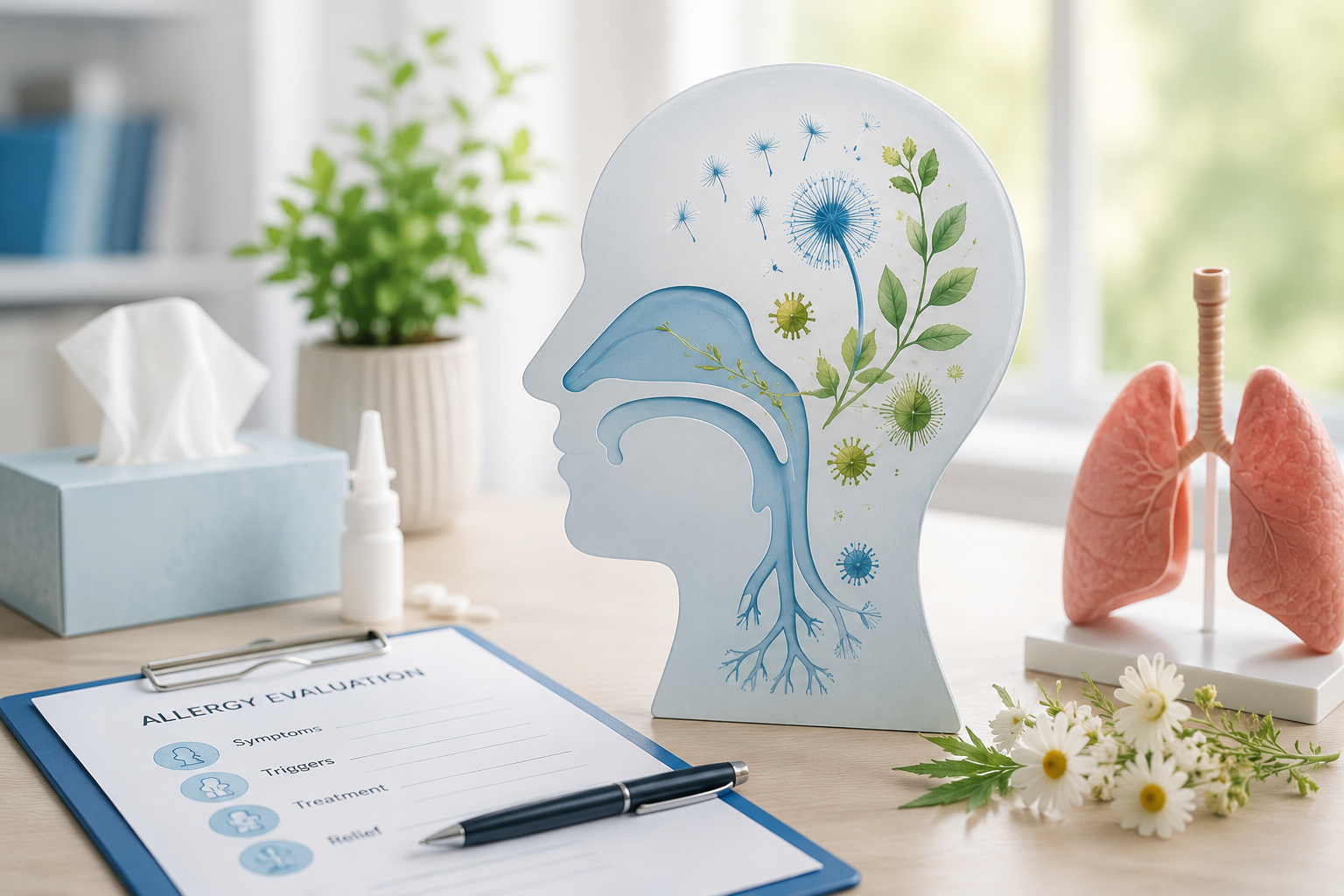
Air quality plays a major role in the health of people living with allergies and asthma. Pollutants such as pollen, dust, smoke, and airborne particles can worsen symptoms, trigger flare-ups, and affect overall quality of life. Understanding how air pollution interacts with allergic conditions can help patients reduce exposure and better manage their symptoms.
Quick Guide
- Poor air quality can worsen allergy and asthma symptoms.
- Pollen, dust, smoke, and pollution are common triggers.
- Checking the Air Quality Index (AQI) can help you plan outdoor activities.
- Indoor air filtration and allergen control can reduce exposure.
- An allergy specialist can recommend personalized treatment if symptoms remain uncontrolled.
What Does Air Quality Mean?
Air quality describes how clean or polluted the surrounding air is. It is commonly measured using the Air Quality Index (AQI), which evaluates pollutants such as particulate matter (PM2.5 and PM10), ozone, nitrogen dioxide, and carbon monoxide.
High pollution levels can irritate the airways, worsen allergies, and trigger asthma symptoms, particularly in sensitive individuals.
Common Air Pollutants That Trigger Allergies
Pollen & Mold Spores
Seasonal pollen and airborne mold spores are among the most common allergy triggers. Wind can carry these allergens over long distances, making exposure difficult to avoid.
Dust & Fine Particles
Tiny airborne particles such as PM2.5 and PM10 can travel deep into the lungs, irritating the respiratory tract and carrying allergens like pet dander or mold.
Smog & Chemical Pollutants
Vehicle emissions, industrial pollution, smoke, and volatile organic compounds (VOCs) can increase airway inflammation and make allergy symptoms more severe.
How Poor Air Quality Triggers Allergy Symptoms
When allergens and pollutants enter the airways, the immune system may release histamine and other inflammatory chemicals. This response can trigger or worsen allergy symptoms, particularly during periods of poor air quality.
- Sneezing and runny nose.
- Itchy or watery eyes.
- Coughing or wheezing.
- Shortness of breath.
- Nasal congestion.
Seasonal vs. Year-Round Allergies
Air pollution affects both seasonal and perennial allergies. Seasonal allergies often worsen when pollen combines with pollution, while year-round allergies such as dust mite or pet dander sensitivity can become more troublesome when indoor or outdoor air quality declines.
Who Is Most Vulnerable?
Some groups are especially sensitive to poor air quality and may experience more severe allergy or asthma symptoms.
Higher-Risk Groups
- Young children.
- Older adults.
- People with asthma.
- Individuals with chronic respiratory disease.
- People with weakened immune systems.
Signs Air Pollution May Be Making Your Allergies Worse
If your symptoms become noticeably worse on days with poor air quality, pollution may be contributing to your discomfort. Recognizing these patterns can help you take steps to reduce exposure.
- More frequent sneezing or nasal congestion.
- Persistent coughing or wheezing.
- Increased asthma flare-ups.
- Itchy, watery, or irritated eyes.
- Shortness of breath during outdoor activities.
Simple Ways to Protect Yourself on Poor Air Quality Days
While you cannot control outdoor pollution, you can reduce your exposure by making a few simple changes to your daily routine.
Practical Tips
- Check the Air Quality Index (AQI) before spending time outdoors.
- Keep windows closed during periods of high pollution or pollen counts.
- Use a HEPA air purifier indoors whenever possible.
- Wear a well-fitting mask if outdoor air quality is poor.
- Vacuum and dust regularly using HEPA-filtered equipment.
- Shower and change clothes after spending extended time outdoors.
Medical Treatment Options
When avoiding triggers is not enough, medical treatment can help reduce symptoms and improve quality of life. An allergy specialist may recommend a combination of therapies based on your specific triggers and medical history.
- Antihistamines for symptom relief.
- Nasal corticosteroid sprays.
- Decongestants when appropriate.
- Allergy immunotherapy (allergy shots or tablets).
- Personalized treatment plans based on allergy testing.
Healthy Lifestyle Habits That Support Allergy Control
Everyday habits can also make a difference in reducing allergy symptoms and supporting respiratory health.
- Stay well hydrated.
- Eat a balanced diet rich in fruits and vegetables.
- Exercise indoors when outdoor air quality is poor.
- Avoid cigarette smoke and secondhand smoke.
- Wash bedding and clean living areas regularly.
Why Monitoring the Air Quality Index (AQI) Matters
Checking your local Air Quality Index each day can help you make informed decisions about outdoor activities. Many weather apps and environmental agencies provide real-time AQI information, making it easier to reduce exposure on days when pollution levels are high.
Clinical Perspective
Managing allergies involves more than treating symptoms. Understanding environmental triggers and recognizing how air quality affects your condition allows for better long-term control. Patients who continue to experience persistent symptoms despite avoiding triggers may benefit from a comprehensive allergy evaluation and personalized treatment plan.
Key Takeaway
Poor air quality can significantly worsen allergy and asthma symptoms, but understanding your triggers and taking practical preventive measures can make a meaningful difference. Monitoring air quality, limiting exposure to pollutants, and working with an allergy specialist can help you achieve better long-term symptom control and improve your overall quality of life.
Find answers to common questions about air quality and allergies.
Frequently Asked Questions
Ready to Take the Next Step?
Whether you’re dealing with seasonal allergies, allergic rhinitis, asthma, sinus conditions, or other immune-related concerns, Dr. Ahdad Ziyar provides personalized evaluations and evidence-based treatment plans tailored to your individual needs.
Request an Appointment